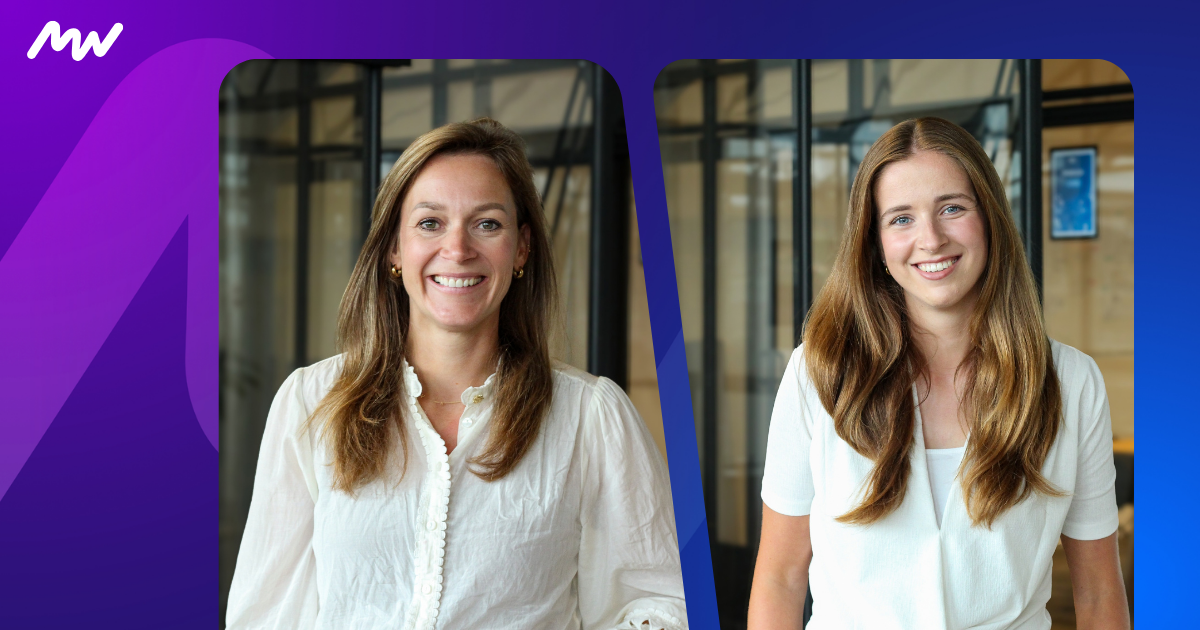


Recruitment is changing fast. New tooling, AI, chatbots, WhatsApp application, dashboards, funnels. Yet interim recruitment manager Thijs Hoekzema sees that many organisations still work the same way at the base.
And that, he says, is where the real challenge lies. "Often recruitment only gets moving when a gap has already appeared. Then suddenly things have to move fast. Campaign live, follow-up accelerate, hiring managers under pressure. But candidates don't wait." According to Thijs, predictable inflow does not start with a vacancy, but with a continuous strategy.
Post & pray is not a tactic, but a signal
Where does he think the biggest profit lies? Not in one tool or channel, but in how organisations look at recruitment.
"We call it proactive, but often the vacancy is still the starting point. We put it online and hope the right people respond."
That pattern makes recruitment dependent on peaks and troughs. Teams work overtime when the pressure is high, budget is only released when the need is felt. As a result, recruitment often remains organised reactively. Whereas continuity ensures peace of mind and a better inflow.
"There are few companies where recruitment is seen as a strategic department. It is often an operational supplier: we want extra people, so arrange it."
If inflow remains dependent on 'putting a vacancy online', timing becomes leading. And timing is rarely perfect. Then the consequences are:
- Campaigns are set up in a hurry
- Succession sags as soon as it gets busy
- Stakeholders pull on your sleeve for 'just a quick' result
- Candidate contact becomes transactional rather than personal
- Data remains superficial: vacancy filled, done
Thijs often sees the latter go wrong. Many organisations call themselves data-driven, but mainly measure in hindsight what has already happened. "The vacancy has been filled, so we have the data. But the real question is: where did that hire come from, why did that person fit and is he still employed after a year? You can learn from that. That's where the real value is."
Technology can accelerate, but only if you dare to set it up differently
Thijs is enthusiastic about technology and AI, precisely because it can bring speed to the whole process from orientation to hiring. But he immediately attaches a condition to it: tooling is no solution if you keep following the old model.
"The gain is in the process. That you don't have to do all the intakes as a recruiter. That you lower the threshold. That it feels more personal, while you do automate."
He cites simple and low-threshold job applications, such as via WhatsApp, as an example of a logical step, especially with younger target groups in retail. Not because a CV is not important, but because you first want to remove the barrier to getting people in the door in the first place. "Many companies still think: if you want to work for us, you really have to bother to send CV and cover letter. That is ignorance. People have a choice. It is up to us to lower the threshold with the technology that is out there."
Preselection tools and AI agents can add a lot of value, according to Thijs, to make the front end leaner without making it impersonal. Less administrative hassle, less back and forth, faster switching. So that recruiters have time for work where people really make a difference.
If you gain time with AI, invest that time in better conversations
If Thijs could get one day a week back through automation? Then he would not put it into yet more sourcing or yet more process: "I would spend it on job interview training within the organisation. Having a good conversation, there's so much profit there. Also when you're talking about assumptions and diversity."
According to Thijs, far too little time is still spent on the quality of interviews. While that is what candidates judge an organisation on. Not just on how fast the process is, but on how seriously they are taken. "If you go for an interview somewhere and it's a good job interview, I can really enjoy that. Even if you get rejected, you can still walk out the door and think: that was strong. But that doesn't happen very often in reality, unfortunately."
And that touches on exactly the promise of AI in recruitment, as Thijs sees it: not making it less human, but rather making room for more humanity at the right time.
From responding to directing
As long as recruitment starts with a vacancy, inflow remains unpredictable and crowds continue to dictate your process. It requires a different mindset: building a structure that keeps running, even when busy.
AI and automation can lighten the administration and bulk work, giving recruiters and hiring managers more room for what provides the most value right now: better choices, better interviews and a candidate experience that is right. Thijs says: "You have to assume who is best. But people are generally biased. That's why you should instead invest in how you conduct interviews and how you select, which contributes to the best hire as well as an optimal candidate experience."