
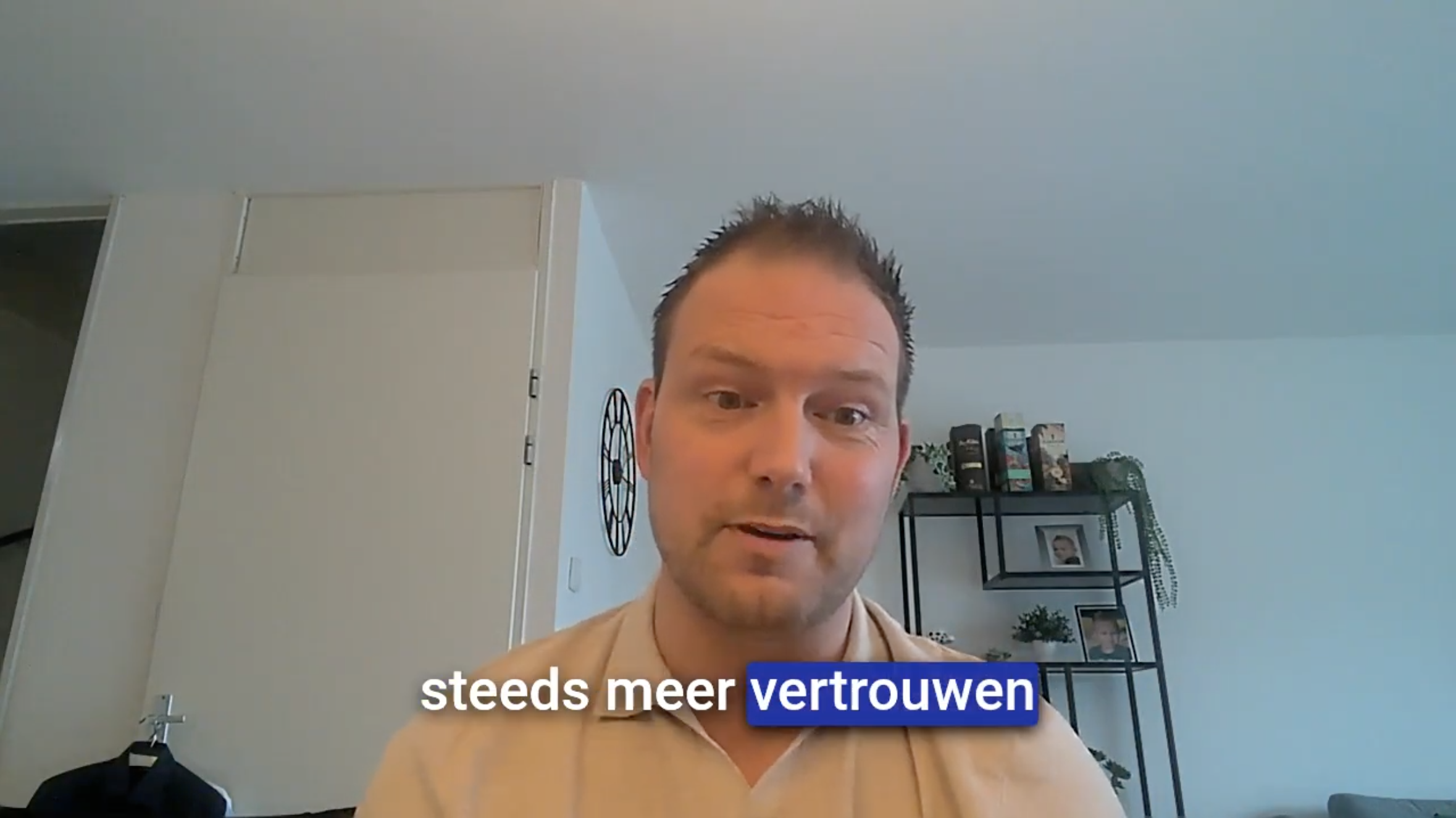
"AI is fundamentally changing recruitment. But those who think it's mostly about tools are missing the point." Bryan Peereboom knows what he is talking about. As Head of Talent Intelligence, Recruitment & AI at Wortell, founder of the National Academy of AI and initiator of Forge35, he finds himself at the intersection of technology, people and organisation on a daily basis.
In this interview, Bryan shares his views on the impact of AI on recruitment, why agentic AI is the next big thing, and why recruiters should worry less about replacement and more about staying relevant.
From 'prompting' to AI that really takes over the work
Anyone who still sees AI in recruitment as a smart text assistant is behind the times, according to Bryan. The biggest development that recruitment teams will feel in the coming period is the shift from generative AI to agentic AI, in other words from AI that reacts to AI agents that act and go through processes independently.
With that, work suddenly becomes much closer to operations. An agent that reads an email, understands context, prepares a response and even creates follow-up tasks. Or systems that automate data entry, update files or route requests. Bryan sums it up sharply: "Anything that requires taking or processing information (i.e. data entry, which you often do manually now) can basically be automated."
But he immediately adds a condition: recruitment is also about decisions. "For specific decisions, you always have to keep human beings in the loop. That is exactly what the playing field is constantly considering: what is allowed and what is not allowed in the context of compliance, governance and legislation."
AI in practice at Wortell: less manual work, more impact
At Wortell, AI is not an experiment on the fringes, but a conscious decision that makes the work structurally different from what it was a year ago. Bryan says: "We now have a team of three AI automation engineers who work on speeding up processes every day. In other words: those boring things you don't like to do."
What he calls "boring stuff" are often exactly the tasks that recruitment teams run out of: endless manual tasks, repetitive administration, repetitive data entry. But also interpreting data, something he says AI actually adds enormous value towards the organisation. "We mainly look at: what has the most impact, and what is technically feasible the fastest? High value, low complexity, that's the low-hanging fruit."
The biggest pitfall: buying tools without understanding what you are doing
When Bryan advises organisations, he sees the same mistake recurring. "Many organisations are already buying tools without understanding the implications for data privacy or how a model works. And that is risky, not only because of legislation, but also because AI still makes mistakes. The biggest gap I see is lack of basic knowledge. A lot of language models still hallucinate. Which information is true and which is not? How do you verify data? Even AI coming up with sources often shows sources that are no longer relevant or just not correct."
According to him, you should instead facilitate employees with a safe learning environment: "You don't need a one-off workshop, but a continuous learning environment. An AI playground where recruiters can safely experiment without fear of influencing live processes or causing bias."
The skill recruiters need is not tool-knowledge, but attitude
Many recruiters feel overwhelmed. Every week there is a new AI tool, a new promise, a new must-have. Bryan understands this, but he feels the conversation often gets stuck in the wrong place.
For him, two qualities stand out: curiosity and adaptability. Not because you have to be able to do everything, but because you have to move with a world that is forming at lightning speed. There is another thing he believes recruiters often underestimate: their humanity. "Recruiters can really be an interlocutor. They are very good at building relationships. And exactly that, at least in the near future, cannot be copied by AI."
At the same time, there is one new basic skill that does become crucial: prompt engineering, or rather simply: how do I effectively talk to a machine? Bryan says: "Stop asking questions like: is AI going to replace me? Start asking: what boring task can I hand over to AI so that I have more time for the fun stuff?"
In five years: fewer recruiters, more 'talent advisors'
When AI is fully integrated, Bryan expects recruitment teams to become smaller, but more strategic. "The department will be a lot smaller, but significantly higher in output and strategic value."